Best Books About Sensory Processing Disorder: A Helpful Guide for Parents
In this post you will be reading about the Best Books About Sensory Processing Disorder: A Helpful Guide for Parents.
Navigating life as a parent can be challenging, but when your child has Sensory Processing Disorder (SPD), it can feel like a whole new world of sensory challenges.
Suddenly, simple tasks like getting dressed, eating, or going to the grocery store can become overwhelming.
As a mom, I know firsthand how disheartening it can be to watch your child struggle with sensory issues, especially when it feels like nobody understands what you’re going through. But trust me, you’re not alone.
Reading the right books can be a lifesaver.
Books are a great way to gain insight into what your child is experiencing and to find practical solutions that make family life easier.
The right sensory processing disorder book can provide the knowledge, comfort, and practical advice you need to support your child effectively.
In this article, I’ll share some of my favorite books about Sensory Processing Disorder, providing both parents of kids with SPD and those who suspect sensory issues might be at play with a valuable resource to better understand and manage sensory challenges. Let’s dive in!
This post may contain affiliate links which means I may receive a commission for purchases made through links (at no extra cost for you). As an Amazon Associate I earn from qualifying purchases. Learn more on my Private Policy & Disclaimer page.
Understanding Sensory Processing Disorder
What Is Sensory Processing Disorder (SPD)?

Sensory Processing Disorder (SPD), also known as Sensory Integration Dysfunction, is a condition where the brain has trouble receiving and responding to information that comes through the senses. Hence why they say processing disorder.
According to WebMD, “Sensory processing problems are usually identified in children. But they can also affect adults. Sensory processing problems are commonly seen in developmental conditions like autism spectrum disorder.” (Read More)
Children with SPD might be overly sensitive to sensory input like loud noises, bright lights, or certain textures. Others might have an under-responsive sensory system and crave sensory experiences, which makes them sensory seekers.
As a parent, you might notice your child has different sensory processing challenges and wonder how to help.
SPD is not a one-size-fits-all diagnosis. Each child can have a unique set of sensory preferences and needs.
For example, my daughter would try to avoid the sound of water coming out of the bathroom faucet, covering her ears and even crying. Meanwhile, my autistic son would constantly seek out new sensory experiences, like jumping on the trampoline for hours. Both were expressing different sensory needs, but each required understanding and support.
Why Parents Need To Educate Themselves About SPD

As parents, it’s crucial to understand what sensory processing issues look like and how they impact your child’s behavior.
By educating yourself, you can better advocate for your child, whether it’s asking questions teachers might not consider or seeking the right occupational therapy.
According to Dr. Lucy Jane Miller, a leading expert in the field, “More than 90% of children with autism spectrum disorder exhibit some degree of sensory processing difficulties.” (Source)
This statistic alone highlights the importance of understanding SPD, especially for parents of children on the autism spectrum.
Learning about sensory processing differences can empower you to create a sensory lifestyle that suits your child’s unique sensory preferences.
It’s also important to recognize that SPD can affect family members in different ways, and educating everyone can lead to a more supportive home environment.
When I first learned about SPD, it was like a lightbulb went off. Suddenly, my child’s behaviors made sense, and I felt more equipped to help them thrive. Books became my go-to resource for learning about SPD and finding practical solutions that could make our daily lives easier.
What Is Sensory Defensiveness

Sensory defensiveness is a heightened sensitivity to certain sensory inputs, where everyday sensations can feel overwhelming, uncomfortable, or even painful.
It often occurs in individuals with sensory processing issues, including those on the autism spectrum.
For example, a child with sensory defensiveness might react strongly to loud noises by covering their ears or crying. They might refuse to wear certain clothing because the fabric feels scratchy or too tight. Another common example is a strong aversion to specific food textures, leading to picky eating habits.
Understanding sensory defensiveness is crucial because it helps parents and caregivers create a more comfortable environment by avoiding triggers and using calming strategies like deep pressure therapy or sensory breaks.
FREE Self – Test For Sensory Processing Disorder In Children
ADDitude has a [Self-Test] Sensory Processing Disorder in Children which is a great and free way for you to be able to assess some of the symptoms you observe in your child and be able to take these concerns to your pediatrician.
Criteria For Selecting The Best Books

Before diving into our list of great books, let’s talk about what makes these books stand out. Here are some key criteria to keep in mind:
Expert Authorship
Books written by medical professionals, such as pediatric occupational therapists, psychologists, and speech-language pathologists, offer valuable insights.
These authors have years of clinical experience and can provide credible, research-backed information about sensory processing issues.
Focus On Practical, Applicable Advice
Parents need more than just theory—they need practical advice they can apply to everyday situations.
The best books provide sensory strategies and solutions that can be easily implemented at home, in school, or in other settings.
Relevance To Both Children And Adults
Since SPD can affect individuals of all ages, it’s important to choose books that address sensory processing differences in both children and adults.
This allows parents to better understand their child’s needs and recognize any sensory issues they might have themselves.
Accessibility And Readability
Not every parent is a medical professional, so books should be written in simple language that’s easy to understand.
An easy-to-read book makes the information accessible, whether you’re a special education teacher, a family doctor, or a parent. And let’s face it, if its too technical, odds are we wont finish reading it.
The Best Books About Sensory Processing Disorder

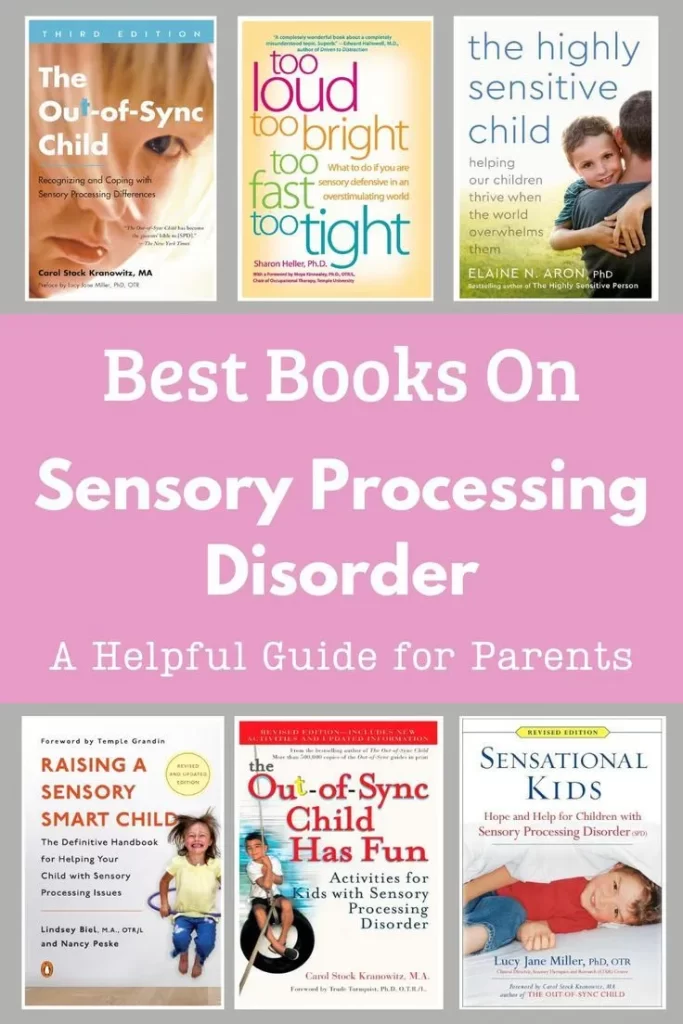
1. “The Out-of-Sync Child” by Carol Stock Kranowitz
When it comes to understanding SPD, “The Out-of-Sync Child” (1998) is often considered the definitive handbook. There is a third edition out (2022) with more up to date research and information.
Carol Stock Kranowitz’s classic book offers a comprehensive guide to understanding sensory integration disorder. And how understanding and addressing these issues can make a significant difference in a child’s development.
It covers the different ways SPD can present in young children, older children, and even adults.
Kranowitz provides practical advice for recognizing sensory processing differences and offers new ways to support children with special needs.
It’s a great book for parents who are new to the world of sensory issues.
2. “Sensational Kids: Hope and Help for Children with Sensory Processing Disorder” by Dr. Lucy Jane Miller
Dr. Lucy Jane Miller is a pioneer in the field of SPD research, and her book “Sensational Kids” offers a thorough exploration of sensory processing challenges.
This book delves into different sensory processing issues, from sensory integration dysfunction to sensory overload, providing a detailed understanding of what SPD looks like and how it can be managed.
What I appreciate most about this book is its hopeful tone. Dr. Miller emphasizes that with the right sensory strategies and support, children with SPD can thrive. And I love that the book is full if examples! There are “case studies” to show different sensory concern.
This book is a valuable resource for parents seeking to better understand their child’s sensory needs and find practical solutions.
3. “The Out-of-Sync Child Has Fun” by Carol Stock Kranowitz
If you’re looking for sensory activities that are both therapeutic and enjoyable, “The Out-of-Sync Child Has Fun” is the perfect companion to Kranowitz’s original edition.
This book is packed with sensory activities that cater to different sensory processing challenges, making it a great way to support your child’s sensory development through play.
In my own home, this book became a go-to guide for turning playtime into a therapeutic experience. Activities like sensory bins and obstacle courses became a normal part of our routine, and they helped my children manage their sensory needs in a fun and engaging way.
4. “Raising a Sensory Smart Child: The Definitive Handbook for Helping Your Child with Sensory Processing Issues” by Lindsey Biel and Nancy Peske
Lindsey Biel, an occupational therapist, and Nancy Peske, a parent advocate, co-authored this comprehensive guide to managing SPD.
“Raising a Sensory Smart Child” provides practical solutions for handling everyday sensory challenges, from morning routines to bedtime.
The book covers a wide range of topics, including sensory integration therapy, school accommodations, and creating a sensory-friendly home.
The authors stress on the importance of creating a sensory diet since it can help the child stay calm, focused, and organized.
I found this book to be incredibly useful because it’s not just about understanding sensory processing disorders—it’s about finding practical solutions that work. The sensory strategies provided in the book helped me create a sensory lifestyle that met my child’s unique needs.
5. “Too Loud, Too Bright, Too Fast, Too Tight: What to Do If You Are Sensory Defensive in an Overstimulating World” by Sharon Heller
Sharon Heller’s book is a great book for parents who might also experience sensory sensitivities.
Heller, a psychologist, delves into the concept of sensory defensiveness and provides practical advice for managing sensory overload.
The book offers strategies for navigating an overstimulating world and finding balance.
As someone who has experienced sensory sensitivities myself, I found this book to be a helpful resource. It gave me insight into my own sensory needs and how to manage them while also supporting my child.
6. “The Highly Sensitive Child: Helping Our Children Thrive When the World Overwhelms Them” by Elaine N. Aron
While not specifically about SPD, Elaine Aron’s “The Highly Sensitive Child” offers valuable insights for parents of children with sensory sensitivities.
Aron explores the concept of high sensitivity and provides practical strategies for helping sensitive children navigate the world.
This book is especially relevant for parents who want to understand the emotional and sensory experiences of their children.
Reading this book helped me see sensitivity in a different light. I realized that sensitivity is not a weakness, but a unique trait that comes with its own strengths.
7. “This Is Gabriel: Making Sense of School” by Hartley Steiner
For younger children, “This Is Gabriel: Making Sense of School” is a wonderful picture book that introduces the concept of SPD in an easy-to-understand way.
Written by Hartley Steiner, a mother of a child with SPD, this book helps kids understand why they might feel different in sensory-rich environments like school.
When my kids were struggling to explain their feelings about sensory overload at school, this picture book was a great way to start the conversation.
Incorporating Sensory Strategies Into Daily Life
Creating a Sensory Diet

“A sensory diet is a tailored plan of physical activities and accommodations designed to meet a child’s sensory needs. This type of treatment has nothing to do with food. The goal is to get kids in a “just right” state.” (Read More)
Just as a balanced nutritional diet helps maintain physical health, a sensory diet helps maintain sensory balance.
Activities might include deep pressure, movement, or oral input to help regulate the sensory system.
In our home, we incorporated a sensory diet into our daily routine. Morning exercises, sensory breaks during homework, and calming activities before bed all helped my child feel more balanced and less overwhelmed.
Practical Solutions for Sensory Overload

Dealing with sensory overload can be one of the biggest challenges for children with SPD.
Strategies like using noise-canceling headphones, creating a quiet space at home, and using visual schedules can help children feel more in control.
But it all comes down to the individual child.
What works for mine not necessarily will work with yours.
Thats why the best thing to do is to understand your child, his/her triggers, and go from there.
Involving Family Members

I know that unfortunately this is sometimes easier said than done.
But, educating family members about SPD is important for creating a supportive environment.
Share your child’s sensory processing differences with relatives, teachers, and other caregivers so they understand how to help.
Books like “The Out-of-Sync Child” can be shared with family members to help them understand SPD and be more empathetic.
In our family, we made it a point to explain my child’s sensory needs to everyone involved in her care. This helped reduce misunderstandings and made social situations less stressful for her.
And we established strong boundaries with our family members. Our kids needs and well-being come first.
In this post you read about the Best Books About Sensory Processing Disorder: A Helpful Guide for Parents.
To Summarize

Sensory Processing Disorder can be challenging, but the right knowledge and tools can make a world of difference.
By reading books on SPD, parents can gain a deeper understanding of their child’s sensory processing issues and learn practical strategies to support their sensory needs.
From “The Out-of-Sync Child” to “Sensational Kids,” these books provide valuable insights that can transform family life.
Remember, you are not alone on this journey!
Whether you’re a seasoned sensory parent or just starting to explore your child’s sensory processing challenges, these resources are here to help.
Don’t hesitate to seek out additional support from medical professionals, occupational therapists, and your local library. Together, we can create a world where every child feels understood and supported.
Other Posts You Will Enjoy
- Headphones For Autistic Children They Will Love
- 29 Caregiver Quotes You Will Love
- Best Activities For People With Autism They Will Love
- Best Free Services In Regional Center For Autism
- Best Free Autism Resources For Parents You should Know About.
About The Author
Written by Belén, a former therapist, late-diagnosed neurodivergent woman, and stay-at-home mom to her autistic son. She creates thoughtful, practical content to support caregivers and families navigating hospital stays, disability, and neurodivergent life.
Follow Me On TikTok